
Wellness Blog

1,200 +
Happy Patients

25 yrs
Years of Experience

75 +
Clinic Branches
1,200 +
Happy Patients
25 yrs
Years of Experience
75 +
Clinic Branches

Trapped in a stress loop
Is Your Brain Trapped in a Stress Loop? How Brain-Based Chiropractic May Help Reset Your Nervous System
Chronic Stress, Poor Sleep and the Modern Lifestyle
Have you ever felt tired but unable to switch off?
You may feel exhausted at the end of the day, yet your mind keeps racing. You struggle to fall asleep, wake feeling unrefreshed and rely on caffeine to get through the day. You may find yourself becoming more reactive to everyday stress, more easily overwhelmed or unable to truly relax.
For many people, this is not caused by one major stressful event.
Instead, the brain and nervous system can become trapped in a stress loop created by the accumulation of small, repeated stressors.
Modern life can expose the brain to these stress signals every day:
Constant busyness and never-ending demands
Poor sleep habits
Disrupted circadian rhythms
Not getting enough morning sunlight
Spending too little time outdoors during the day
Limited exposure to natural daylight
Excessive artificial light after dark
Too much screen and technology exposure
Insufficient time in nature
Limited physical movement
A lack of connection with the natural environment
Each of these factors may seem relatively minor.
But the brain doesn't experience your lifestyle as a collection of isolated events.
It experiences your lifestyle as a pattern.
And when the pattern repeatedly communicates stress, urgency and insufficient recovery, the brain and nervous system can begin adapting to that environment.
This is one reason why some people can feel like they are constantly "stuck on."
The problem may not be that their brain is broken.
The problem may be that their brain has become very good at responding to the environment it has repeatedly experienced.
What Is a Stress Loop?
A stress loop occurs when the brain and nervous system become caught in a repetitive cycle of stress activation and incomplete recovery.
The brain perceives stress.
The nervous system responds.
The body becomes more alert and activated.
The stress passes — but the nervous system doesn't completely return to baseline.
Another stressor arrives.
The stress response activates again.
Over time, the brain can become increasingly familiar with this pattern.
Eventually, it may take less and less to trigger a stress response, while it becomes more difficult to return to a deeply relaxed and restorative state.
This can create a cycle that looks something like this:
Stress → nervous system activation → poor recovery → depleted brain function → increased sensitivity to stress → more stress.
And around and around it goes.
This is the stress loop.
How Modern Lifestyle Can Keep the Stress Loop Going
The modern environment is very different from the environment in which the human brain evolved.
We are surrounded by artificial light, screens, notifications, constant information, deadlines and an expectation to always be available.
Our brains are often stimulated from the moment we wake until the moment we finally fall asleep.
We can spend the entire day indoors under artificial lighting, rarely experiencing the natural light of the sun.
We can miss the important morning sunlight that helps anchor our circadian rhythm, spend very little time outside during daylight hours and then expose ourselves to bright artificial light late into the evening.
At the same time, we may be sitting for long periods, eating at irregular times and trying to recover from the day while continuing to stimulate the brain with phones, computers, television and social media.
Individually, these behaviours may seem harmless.
But repeated every day, they can create a biological environment that makes it increasingly difficult for the brain and nervous system to find balance.
Your Brain Learns What You Repeat
The brain is constantly changing in response to experience.
It is designed to recognise patterns, predict what is coming next and prepare the body to respond.
This is one of the reasons repetition is so powerful.
If you repeatedly experience stress, your brain becomes familiar with stress.
If you repeatedly stay busy, your brain becomes familiar with being busy.
If you repeatedly sleep poorly, your brain becomes familiar with functioning without adequate recovery.
If you repeatedly expose yourself to bright artificial light at night, your brain receives confusing signals about whether it is day or night.
If you rarely experience natural daylight, your circadian system receives less of the environmental information it evolved to use.
Over time, these repeated experiences can influence the way your brain and nervous system respond.
You are what you repeat.
The question is:
What are you teaching your brain to repeat every day?
The Connection Between Stress, Sleep and the Nervous System
One of the most common consequences of being caught in a chronic stress loop is poor sleep.
The relationship between stress and sleep can become a vicious cycle.
Stress makes it harder to switch off.
Poor sleep reduces recovery.
Reduced recovery leaves the brain less resilient to stress.
Increased stress sensitivity makes it harder to relax.
And difficulty relaxing makes sleep even more challenging.
The cycle continues.
This is why improving sleep is not always as simple as "going to bed earlier."
Your sleep is influenced by the signals your brain receives throughout the entire day.
Your brain is constantly asking:
Is it daytime or nighttime?
Is it safe to relax?
Is it time to be alert?
Is it time to recover?
Your lifestyle provides the answers.
Your Circadian Rhythm and the Brain
Your circadian rhythm is your body's internal 24-hour biological timing system.
It influences sleep and wakefulness and interacts with many processes throughout the body.
Light is one of the most powerful environmental signals that helps regulate this rhythm.
The brain expects a strong contrast between day and night.
Bright natural light during the day.
Darker conditions after sunset.
Modern life often reverses this pattern.
We may spend our days indoors with relatively low levels of artificial light, then spend our evenings surrounded by bright LEDs, televisions, computers and phone screens.
From the perspective of the brain, the environmental signals become confusing.
It is still receiving "daytime" information when the body should be preparing for nighttime recovery.
This is why your circadian rhythm and nervous system regulation are important parts of the stress conversation.
Your brain needs appropriate environmental signals to know when to be alert and when to recover.
Morning Sunlight: A Simple Signal for Your Brain
One of the simplest ways to support your circadian rhythm is to get outside in the morning and experience natural sunlight.
Morning light provides an important environmental signal to the brain that the day has begun.
Whenever practical, getting outside soon after waking can help establish a stronger day-night rhythm.
Rather than immediately reaching for your phone and spending the first part of your day indoors, consider stepping outside and allowing your brain to experience the natural morning environment.
Your brain evolved with the sunrise.
It knows what to do with it.
Natural Daylight and Sensible Sun Exposure
Your brain and body are designed to experience natural daylight throughout the day.
Spending time outside provides exposure to a much richer and more dynamic light environment than typical indoor lighting.
Where appropriate, sensible exposure to natural sunlight, including moderate UVB exposure when conditions allow, can also be part of a healthy lifestyle.
Sun exposure should always be individualised according to your skin type, geographic location, season and personal circumstances, with appropriate protection used to reduce the risk of sun damage.
The goal is not to avoid the sun completely.
It is to develop a healthy relationship with natural light.
Why Artificial Light at Night May Matter
Artificial light has transformed modern life.
It has also changed the environment in which the human brain operates.
Bright LEDs, screens, televisions, computers and smartphones allow us to remain exposed to light long after sunset.
But nighttime is supposed to be different from daytime.
The brain needs darkness as an important signal that it is time to transition towards sleep and recovery.
Reducing artificial light in the evening can help create a stronger contrast between day and night.
Consider:
Dimming household lighting after sunset
Reducing unnecessary screen use before bed
Using warmer, lower-intensity lighting in the evening
Creating a darker bedroom
Establishing a consistent bedtime routine
Your brain needs to know when the day is finished.
Darkness is not the absence of information. It is information.
The Role of Nature and Grounding
Modern life can also disconnect us from the natural environment.
We spend much of our time indoors.
We wear shoes.
We walk on concrete and synthetic surfaces.
We sit at desks.
We stare at screens.
We live under artificial lighting.
We rarely experience the changing conditions of the natural world.
Spending time outdoors and reconnecting with nature can provide a valuable change in sensory input for the brain and nervous system.
Walking outside.
Sitting in natural light.
Feeling the grass beneath your feet.
Moving through natural environments.
Spending time barefoot outdoors when appropriate.
These simple activities can help us reconnect with the natural rhythms of our environment.
Grounding, or earthing, is an area of ongoing scientific interest, and while more research is needed to understand its potential health effects, spending time outdoors and connecting with nature can be a simple way to bring more natural experiences into your daily life.
What Is Brain-Based Chiropractic?
At Joshua Wellness Practice, we use a brain-based chiropractic approach that focuses on the brain and nervous system.
The brain is the master coordinator of the body.
It constantly receives information from the body and the environment, interprets that information and coordinates an appropriate response.
When the brain and nervous system become stuck in repetitive patterns, it may be helpful to look beyond the symptoms and understand the underlying patterns of nervous system function.
This is where brain-based chiropractic care may play a role.
Can Chiropractic Help Break the Stress Loop?
The goal of brain-based chiropractic is not to "turn off" stress.
Stress is a normal and necessary part of life.
The goal is to help the brain and nervous system become more adaptable.
An adjustment provides a sensory input to the nervous system that can act as a pattern interrupt.
Think about a computer program that has become stuck running the same cycle.
Sometimes, the first step is to interrupt the loop.
In a similar way, a chiropractic adjustment may provide the brain with new sensory information that can help interrupt repetitive patterns of nervous system activity.
This creates an opportunity for the brain and nervous system to shift, adapt and potentially find a more balanced state.
Brain-based chiropractic is therefore not about forcing the nervous system into relaxation.
It is about providing meaningful input that may help the brain change the pattern.
The Adjustment Is the Pattern Interrupt — Your Lifestyle Builds the New Pattern
A chiropractic adjustment may provide the pattern interrupt.
But your lifestyle provides the ongoing information.
This is why brain-based chiropractic care should not be viewed in isolation.
If you receive a nervous system input designed to interrupt an old pattern but then return to the same lifestyle that created and reinforced that pattern, the brain may continue receiving the same signals.
The goal is to create a new pattern.
That means combining appropriate chiropractic care with lifestyle habits that support the brain and nervous system.
Give Your Brain More Natural Light
Get morning sunlight.
Spend time outdoors during the day.
Allow your brain to experience natural daylight.
Create Darkness at Night
Reduce artificial light after sunset.
Dim the lights.
Limit unnecessary screen exposure.
Give your brain a clear signal that nighttime has arrived.
Prioritise Sleep
Create a consistent sleep schedule.
Give yourself enough time in bed.
Develop a calming evening routine.
Remember that sleep is not simply "downtime."
Sleep is a critical opportunity for the brain and body to recover.
Move Your Body
Movement provides important sensory information to the brain.
Walk.
Stretch.
Exercise.
Play.
Move outdoors whenever possible.
Spend Time in Nature
Allow your nervous system to experience environments that are less stimulating than the modern digital world.
Slow Down
Constant busyness can become a stress signal in itself.
Create moments during the day where your brain does not have to perform, produce or process information.
Breaking the Stress Loop
If you feel constantly tired, overwhelmed, wired or unable to switch off, it may be worth asking a different question.
Instead of asking:
"What's wrong with me?"
Ask:
"What patterns has my brain been adapting to?"
Your brain is constantly learning from your environment.
It learns from your sleep.
It learns from your stress.
It learns from your thoughts.
It learns from your movement.
It learns from the light you experience.
It learns from the darkness you don't experience.
It learns from the time you spend indoors.
It learns from the time you spend in nature.
It learns from what you repeat.
The good news is that the brain is adaptable.
The same neuroplasticity that allows the brain to develop patterns of stress also gives it the capacity to develop new patterns.
Sometimes the first step is to interrupt the loop.
Then you need to give the brain and nervous system something different to repeat.
Your Brain Can Change Its Pattern
At Joshua Wellness Practice, we believe that your symptoms are not the whole story.
Your brain and nervous system are constantly adapting to the world around you.
If your lifestyle has been sending repeated signals of stress, poor sleep, circadian disruption and insufficient recovery, your nervous system may have become highly skilled at surviving — but less skilled at recovering.
Brain-based chiropractic care may provide an opportunity to interrupt these patterns and give the nervous system new information.
Your daily lifestyle then becomes part of the process of creating a new pattern.
More morning sunlight.
More natural daylight.
More time outdoors.
Better sleep rhythms.
Less artificial light at night.
More movement.
More connection with nature.
More opportunities for recovery.
The goal is not to eliminate all stress from your life.
The goal is to help your brain and nervous system become better at adapting to stress and returning to balance.
Because the brain is always learning.
And the question is not whether your brain is changing.
The question is:
What are you teaching it to become?
At Joshua Wellness Practice, our approach is centred around understanding the brain and nervous system, identifying patterns and helping you create the conditions for greater adaptability, resilience and wellbeing.
Sometimes, you don't need to push harder.
Sometimes, you need to break the pattern.
Empowering transformation.
Book a Brain-Based Chiropractic Consultation
If you feel like your nervous system is constantly "switched on", you're struggling with poor sleep, or you feel caught in a cycle of stress and exhaustion, a brain-based chiropractic approach may help you better understand the patterns within your nervous system.
Contact Joshua Wellness Practice to learn more about our brain and nervous system-centred approach to chiropractic care.
Your brain responds to what you repeatedly give it.
Give it a better pattern to follow.

Brain Tap
Is a great, simple yet effective technology that can be combined with your chiropractic adjustment to help maximise your natural healing ability. It does this via optimising brain waves and balancing the fight or flight and calming sides of the nervous system. Brain Tap is a relaxation/meditation technology using light, sound and guided talking to assist your brain in achieving its peak potential, sharpening the mind and provide freedom from stress and anxiety.
Treat yourself with 10-20min of blissful relaxation and reboot your brain allowing maximum benefits from your chiropractic adjustment to take effect.
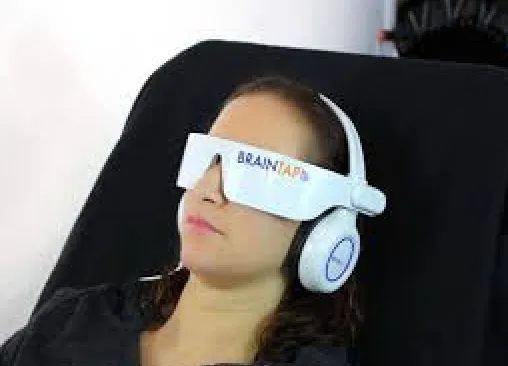
$100 off the BrainTap Power Bundle and the BrainTap Headset.
Click the link below and enjoy a $100 discount when you use the coupon code: PARTNER100
When does health begin?
Our health begins at conception. If the building blocks that are available (from the parents) are not healthy, the foetus may start its journey through life behind the eight-ball. Care must be taken by people considering starting or adding to a family to ensure they are functioning at their optimal level of health.
Chiropractic care is effective in helping people of all ages to reach their optimal health.
Babies
The physical and chemical stresses of the birth process are a very significant factor in the health of a baby. Drugs used during pregnancy and/or at the time of birth; unnatural neck positions, the force of contractions on a tiny baby's body, together with the use of forceps, vacuum or cesarean sections can dramatically impact on a new-born's health.
All of this, together with the health of the parents during the pregnancy and the up-coming challenges of learning to walk etc. that children face are all reasons why babies to be checked by a chiropractor.
Adults
Research shows that up to 40% of 15 year old children have some type of chronic condition 1 and 85% of all adults will suffer back pain bad enough to keep them off work at some stage in their lives 2 . These are not favorable statistics.
What is it that sees so many people unhealthy?
Our lifestyle contains many stresses - spiritually, emotionally, chemically and physically. We all face these stresses, but if our body is not functioning at 100% of its potential (if there is nervous system interference), these stresses will cause our body to break down over time as it fails to adapt.
Isn't it smart to get and keep your nervous system and body working at its full potential?
Babies
The physical and chemical stresses of the birth process are a very significant factor in the health of a baby. Drugs used during pregnancy and/or at the time of birth; unnatural neck positions, the force of contractions on a tiny baby's body, together with the use of forceps, vacuum or cesarean sections can dramatically impact on a new-born's health.
All of this, together with the health of the parents during the pregnancy and the up-coming challenges of learning to walk etc. that children face are all reasons why babies to be checked by a chiropractor.
Children
Part of growing up is learning to ride bikes, climb trees, play sports and even wrestle with siblings.
It is also a time that the body will grow and develop both physically and mentally faster than at any other time during life. Just because kids often do not complain of symptoms does not mean their bodies are functioning at their true potential.
The nervous system interference controls growth, healing, learning and development. A body free of nervous system interference will have the best possible chance to function and develop to the highest level.
Adults
Research shows that up to 40% of 15 year old children have some type of chronic condition 1 and 85% of all adults will suffer back pain bad enough to keep them off work at some stage in their lives 2 . These are not favorable statistics.
What is it that sees so many people unhealthy?
Our lifestyle contains many stresses - spiritually, emotionally, chemically and physically. We all face these stresses, but if our body is not functioning at 100% of its potential (if there is nervous system interference), these stresses will cause our body to break down over time as it fails to adapt.
Isn't it smart to get and keep your nervous system and body working at its full potential?
Elderly
Are you getting too old to worry about your health?
Are you ready for the nursing home?
NEVER! Why should the health of the elderly be viewed as something beyond hope. A healthy spine and nervous system will result in improved healing, improved immunity and greater enjoyment in life. Discover why so many people are finding that with chiropractic care they can add "years to your life and life to your years".
Reference:
1. Children, Australia. A Social Report. Australian Beureau of Statistics - 1999.
2. Chapman-Smith, D. The Chiropractic Profession. NCMIC Group - 2000.
Conditions Under Our Expertise

Chiropractic Care
The nervous system holds the key to the body’s incredible potential to heal itself.

Custom Orthotics
Balancing energy flow for overall health and wellness.
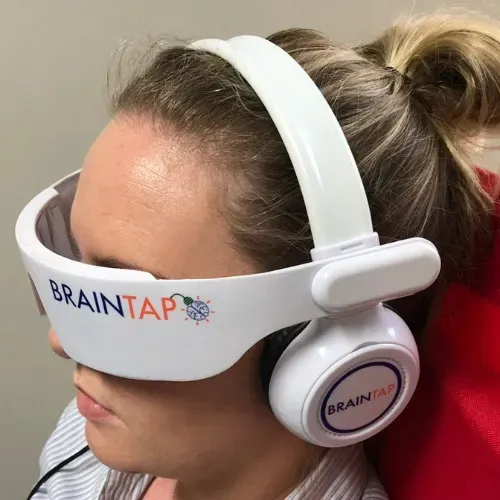
BrainTap
Reboot your brain allowing maximum benefits from your chiropractic adjustment to take effect.

"It is an awesome privilege and my ongoing passion to help people and families live out great quality lives."
Dr Justin Peatling
Chiropractor
TESTIMONIALS
Our Patient Reviews

"Testimomnial lorem ipsum dolor sit amet, consectetur adipisicing elit. Autem dolore, alias, numquam enim dolor elit."
- Name ipsum

Choosing you was the best decision for my health. The personalized care, expert guidance, and transformative approach made a significant impact on my well-being.
I am grateful for the dedicated team who not only alleviated my pain but empowered me with the knowledge to sustain a healthier lifestyle. Trustworthy, compassionate, and effective – I highly recommend you for anyone seeking holistic chiropractic care."
- Best name ever

"Testimomnial lorem ipsum dolor sit amet, consectetur adipisicing elit. Autem dolore, alias, numquam enim dolor elit."
- Name ipsum
Chiropractic care is for kids too...
The health of your children and wanting the very best for them must be one of the most important things a parent can desire. Wanting to see them grow up and develop to their true potential is a thing that parents seek. It is natural to want the very best for your kids.
On the other hand, an unhealthy child can be trying to a family. The feeling of helplessness, and not knowing which way to turn can bring great amounts of distress. As a child grows and develops both mentally and physically, it is vital that their nervous system is working free of interference.
You are never too old or too young to have your nervous system balance checked.

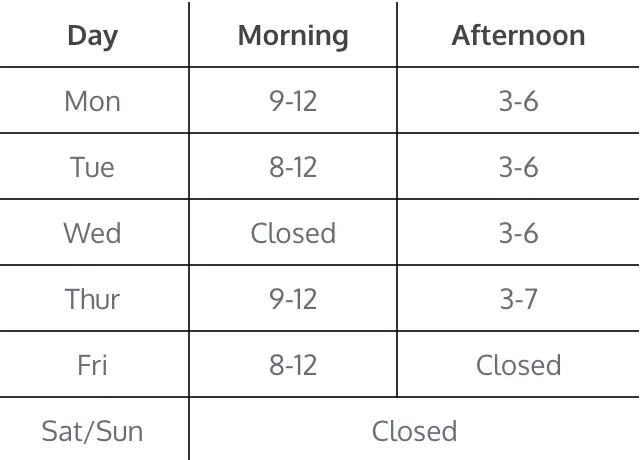
Practice Hours
Subscribe to our newsletter
Get In Touch
Quick Links
Services
Let's Connect!


Copyright 2026. Joshua Wellness Practice. All Rights Reserved.

Practice Hours
Quick Links
Services
Get In Touch
Let's Connect!
Copyright 2026. Joshua Wellness Practice. All Rights Reserved.